Showing posts with label Book Reviews. Show all posts

Book Review: Extraordinary Leaders in Extraordinary Times

0 comments

Extraordinary Leaders in Extraordinary Times Volume 1 9780802829771

Hello friends!


We're back after a great Tech Free Monday Sabbath (TFMS), and we're offering up a book review. I actually finished the book a while ago, but seeing as this book was authored by my professor, I figured I would get a better handle on the book after the class was over. Usually, I struggle with professors who use their own books as a text book for a course they're teaching. It sometimes comes off as shameless self promotion, which I don't really want to deal with in a class I'm paying for. But that wasn't the case with Extraordinary Leaders in Extraordinary Times.


For one thing, this book is based largely on research in the field of New Church Development (NCDs for those of us in the biz...) and not based on the authors' opinions. The basic question was this: If there are NCDs that are effective and NCDs that flop, are there specific attributes of the leadership of those church plants that are consistent across the board? Is there one type of church planter who will be successful? 


The short answer after the class is no. While you can discover a few traits that will more frequently lead to success, like being a "Catalytic innovator", many of the church planters we met with during the class failed to contain all or even some of the tier one attributes from Extraordinary Leaders. At the end of the day, if God calls you to plant a church, God has called you to plant a church.


That said, if you are feeling that call on your life, this book is a MUST HAVE resource. It, combined with several other books on pastoral skill sets, can enlighten the attributes that you are strongest at, and also give you something to work towards on your weakest attributes. For instance, I think I'm a pretty strong Catalytic Innovator, in that I love few things more than staring at a blank whiteboard and making a new program or dream come to life through brainstorming, visioning, and discussing things with co-workers and friends. However, my desire to share my faith in one on one situations has been less than stellar. So after reading Extraordinary Leaders I have tried to spend some time hanging out with lost people. 


Also, it's worth mentioning that though these skill sets are specifically found in NCD pastors, those who lead existing churches probably have a good bit to learn from Extraordinary Leaders. The data from focus groups in particular helped to color in some views that I share, and challenge a few of my thoughts on church development. But even as a youth leader, there were practical tips and ideas that we can bring to Veritas right from the pages of this book. 


If there were any critiques of the book, they would be that it's based on surveys and research, and so at certain points read a little like a statistics manual. But when compared to how much like a statistics manual it could read, it's an extremely well written book. Also with the use of focus group data across several authors, occasionally you will find quotes re-used several times, making the book feel a bit repetitive. 


All that said, this book is required reading for anyone considering planting a church. It will surely live on my shelf and come out occasionally during times of prayer for discernment about where to go after seminary. But we get to go farther than the usual book review on this one. This book was followed up with one of the most innovative, creative, and inspiring classes I've ever had, and so tomorrow we'll be reviewing the class itself. You don't want to miss that!

Book Review: Working the Angles by Eugene Peterson

0 comments

Peterson  Working te Angles

Greetings again friends,

Two blog posts on a Friday? You guys are lucky! 

Seminary kicks back into full gear for me again here in two weeks, and because this first class is a two week intensive, I need to read like the dickens before it gets here. 1,200 pages worth to be exact. Not being the fastest reader in the world, I had to get cracking. 

So I just finished up the first of the books on my list, Working the Angles by Euguene Peterson. Most people when I mention his name roll their eyes slightly, with visions of The Message dancing in their heads. True, that's not my absolute favorite translation of the scriptures. But when it comes to writing about what it takes to be a pastor and lead a community of people in the ways of Jesus, Peterson is second to none. 

In Working the Angles, Peterson notes that many of us pastors have become adept at faking it. We've figured out that if we preach the same 6 sermons with slightly different funny illustrations, show up at the occasional board meeting to open with prayer, and make our rounds at the hospitals for visitation, then we've earned our paycheck. For Peterson, being a pastor is not (and sounds like has never been) about earning a paycheck. Being a pastor is not about faking it. Being a pastor is about faithfully leading a community of believers. 

Three areas in the pastors life seem to be deeply missing according to Peterson, and they make up the three sections of this book. The first is prayer. Who among us hasn't wanted to elevate the prayer life of their congregation (or in most of our cases, youth group)? But if our prayer life is simply opening up meetings and gatherings with a few short words, then haven't we taught our flock to pray the same way? Peterson reminds us that prayer is essentially spending time in the presence of God, and so few of us actually carve out enough time in our busy schedules to pray properly. If by the end of the first section you aren't equal parts encouraged and challenged, you haven't been paying attention to this book!

The second area we need to spend more attention is in the habit of scripture reading. In this section, Peterson sounds a lot like the conversations I have with my self in my own head, only he's way more articulate. Too many have reduced the Bible to a book containing facts. We tear apart the facts and tidbits of Greek and Hebrew with our modern exegetical studies, all the while sucking the life directly out of the living and active word. We have to wrestle with the book. We have to listen to what God has to say to us, not just reading the words off the page. We need to engage the scriptures contemplatively today. 

The last area is in that of Spiritual Direction. Some of us have seemingly confused Spiritual Direction with Christian Counseling. They're not the same. The act of Spiritual Direction is a lot like having a guide on a wilderness trip. Someone who has been there before, and is willing to walk along with you as you go. Too often, I am at least convicted that my spiritual direction is more about my having an idea to fix a person's problem, rather than just letting them speak and share with me. 

Like I said, Working the Angles is both encouraging and challenging. It helped me to celebrate where I am, and desire to get to where I want to be. I highly recommend it for anyone working in any level of ministry. 

Have a great weekend!

Godspeed,

J

Book Review: This Beautiful Mess

0 comments

171110

Hello again everybody!

A book a week is a very fast pace for me, and yet here we are two weeks into the summer and that seems to be what I'm up to! Don't forget, I've got this Goodreads account now, so you can follow along with all my reading pleasures. 

One of the things Goodreads makes me do is to finally give stars to books. 5 stars is great, 1 star is I hated it. I'll admit that after I finished Rick McKinley's This Beautiful Mess last night, my mouse had a hard time choosing how many stars to give it. Here's why: 

I think it's a great book. I think all of the information it provides is relevant, and I think the angles McKinley writes from are angles that I appreciate and agree with. But while there were a few new thoughts posed to me in this book, it felt like something I had read before. I think a lot of people are talking about the breaking in of the Kingdom of God into the world we find ourselves living. I think people have written about how our money management and creation care matter a great deal to the King, and how we should approach those decisions with the Kingdom of God. All of that is true, and all of that is needed in this American culture. 

But as I kept reading, and as I kept realizing that I have read countless other books just like this one, I became more and more frustrated both at myself and at the Church. If so many people are aware of how the American Empire and the Kingdom of God are at odds with each other, and books sales on this topic are lucrative, then why hasn't anything changed? If so many in the pews could read McKinley's book and sound their silent "amen", then where's the radical action that is prescribed? 

This may be why this is one of a few books where I actually appreciated a pastor sharing what his church is doing. At least someone gets it. At least someone is making progress in opening the eyes of the community to the Kingdom. 

I think if I was in a different mindset, I would have LOVED this book. As it was, I was looking for something that would challenge me and my way of thinking, and at the end of the day McKinley and I see the world far too similarly for me to be challenged. 

And so at the moment, I've given this book THREE STARS, but with the understanding that I'm going to read it again later sometime this year, and that my mindset being different, it might earn itself more. But for McKinley's part, the writing is solid, and the points made are brilliant. I think I'm just in the mood to read someone who makes me want to punch them!

More reviews to come!

Godspeed,

J

Book Review: Traveling Mercies

1 comments

Imgres

Hey friends,

As mentioned a couple of posts ago, I have been blessed with some extra free time lately to read anything I so choose. And so I've got myself a Goodreads account (at my librarian wife's suggestion) and a summer reading list, and started going to town. Let's see if we can beef up the book reviews section of the J-Blog here!

I wanted to start with some books that I read a long time ago, and haven't come back to since. Anne Lamott's Traveling Mercies hopped right off the shelf, begging for a second go around. I read it in college actually, in my introduction to religions course. This was how our professor introduced us to Christianity (something I was at least a little familiar with), and I am eternally grateful that he did!

If you're like me, and you grew up in the kind of rigid mindset that Christianity has to look like it does on TV or in the news or how everyone thinks that Christianity is going to look, then Traveling Mercies is like drinking an incredibly refreshing glass of water. For starters, Lamott writes in the same voice/style as what's going on in my brain, and for that we should pray for her! But I can relate, and that's half the battle when reading isn't it?

I don't think Lamott's upbringing was standard for most Christians, or at least certainly not for me. But I love it anyway. I loved to read lilly pads and see how Jesus was hard at work in Lamott's life, trying to find his way in like a cat that followed her around for days. I love that Jesus can heal and refresh all of us, including the drug addicted alcoholics who struggle with eating disorders. Those, he can turn into a great spiritual voice in our generation.

What I can appreciate is that this book isn't quite as controversial today as it probably was in 2000, and by that I mean I think the Church as an institution has grown up a bit in America. Or at least I hope it has. The things that caused my college classmates to bristle at this book when we read it seem like every day occurrences now, as though we're trying to adapt our way of thinking to what Jesus is asking from us in this time and in this place. I hope we're always ready to adapt our way of thinking to what Jesus is up to. One of my favorite scenes in the book is when the 7 year old Sam (Anne's son) leans his head out of their broken down car to curse at the people who are cursing at them. Life is real. Sometimes cars break down and the F Bomb is the only appropriate word to hit your tongue. Jesus is real. I think he wants to meet us where our life is at its most real, difficult, and challenging. It only makes sense that we try not to be fake around Jesus.

Anyway, if you're new to Christianity, this is actually a great place to start. And if your particular stream of Christianity could use a bit of a refresh, it's equally awesome. Pick it up today!

Book/Movie Review: Blue Like Jazz

0 comments

Blue Like Jazz Movie

Hello friends,

On Saturday, Sarah and I went to see Blue Like Jazz. I had read the book a long time ago, when I had first started out in youth ministry, and so I was really excited to see the film version. Plus, Donald Miller's A Million Miles in a Thousand Years is one of my favorite books, and it deals a lot with the creation and process behind the movie. A few people have asked me to share my thoughts about it, and so I've been collecting said thoughts and decided to share them here.

First things first, at just about every event I've been to for the last year or so, there have been pre-screenings offered of the movie. I avoided them like the plague. For starters, as a song writer and creative type person myself, I don't think it's super fair to see someone's creative work before it's finished. Also, the Skit Guys were always playing at the same time, and those dudes are hilarious. But probably most importantly, I like seeing a movie in the theater. I like the experience. The popcorn, the sticky floor that you try your hardest not to think too much about.

To summarize my thoughts of the movie in a word: Awesome. I think it did an INCREDIBLY accurate job of depicting what an alarming percentage of our students go through when they go to college. Doubt. Trial. Denial. Fear. And somehow in it all, faith. Honestly, the moment it's available to me on DVD, I'm planning on sharing it with our high school students. This is stuff they need to know.

I had seen some reviews before I went to the movie that said that Blue Like Jazz was a bit critical of the church. That's true, it is. But we need to be honest, especially those of us who work in the church, there's a lot to be critical about. We don't get anywhere by pretending our junk doesn't exist. We don't get anywhere by practicing some kind of cultural monasticism, living in our own little Christian bubble and claiming to have nothing to do with those who are on the outside. We get somewhere (if not everywhere) by being honest. And this film is a heaping bowl of honesty.

I think one of my favorite lines from the movie/book is "Sometimes, you have to watch somebody love something before you can love it yourself." In the movie, Don loves Jesus because he watches his friend Penny love Jesus. In the theater, I fell deeper in love with Jesus by watching the passion and the skill and the direction of Donald Miller, Steven Taylor, and all the folks who worked on this project. And truthfully, isn't that the best compliment that can be given of art? It made me fall in love with my Creator more.

If you get a chance, go see it in a theater. Not only does the sticky floor enhance the experience, but these guys put a lot of work into this thing, and should experience the success that comes from a cloud of people invading their local theater.

Eight thumbs up.

Thank you!

0 comments

20000 thank yous

Wow!

The J-Blog has hit 20,000 views! That means that 20,000 of you have accidentally found this website while searching for the Toronto Blue Jays, or that one person has been constantly refreshing to see if I will ever say something negative about Rob Bell. Either way, thanks for making the J-Blog one of the most fun things I do all week!

Tour Review: Rob Bell's Fit to Smash Ice Tour.

3 comments

Robbelltour1kf

Greetings friends!

Last night, Sarah and I, along with Sarah's mom, went to see Rob Bell's Fit to Smash Ice Tour. If you've been following this blog even for a few seconds, you know that I am one of the world's biggest Rob Bell fans, so there wasn't a chance I was going to miss this!

I had only missed one of his tours up until this point. Everything is Spiritual and The God's Aren't Angry were amazing. First of all, they almost made my head explode with the level of complexity and theology contained within each, to the point that I don't think I really "got it" for either of them until they came out of DVD and I could watch them two or three more times to try to wrap my head around everything. They were like two hour sermons, which when you think about it is amazing that anyone would pay money to go see in this culture of ours. He's that good of a preacher.

But last night didn't feel like a sermon. It didn't even really make my head want to explode. Rob came out with a stool and a box of props, and proceeded to tell stories. Actually, mostly stories about his personal life. I do this all the time for my sermons, but even I will confess that it takes a lot of guts to share your personal life with that many people on a nightly basis, which is what happens on a big speaking tour like that.

The topics were all over the place really, from failure to creativity to originality, and even a few moments on what it feels like to be publicly criticized for a book you'd written by faceless bloggers (it's probably no conciliation to be praised publicly by faceless bloggers, but here we are anyway...). When the event was over and I looked at my watch, I simply couldn't believe that 2 hours had passed. It felt like 5 minutes.

The tour isn't going to very many cities thus far, but if it's coming anywhere near you I'd go and see it. It's an unbelievably brave thing for someone to open his heart up like that, and when someone does, I think we all have a lot to learn from it!

Godspeed,

J

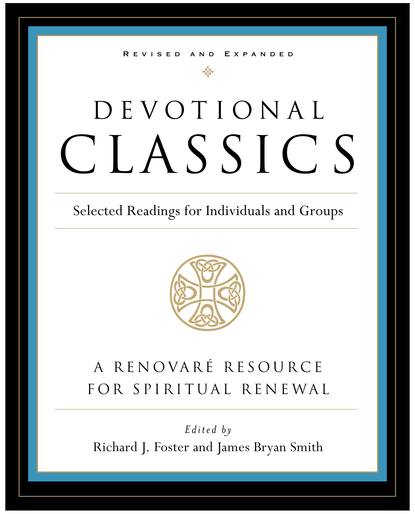
Book Review: Devotional Classics

0 comments

9780060777500 0 Cover

Hello happy readers!

One of the three books that was required of my Spiritual Formation class is Devotional Classics, edited by Richard Foster and James Bryan Smith. It's a collection of the best of the best in terms of writers throughout the Christian Tradition, and offers up their thoughts on a wide variety of subjects from evangelism to scripture study.

I strongly recommend this book, particularly if you find yourself regularly in charge of a small group. I think these short little snippets would work incredibly well as a weekly study, which would give you a LOT of weeks of material (the book is well over 300 pages long). There were only a handful of authors that I had actually read before (C.S. Lewis and Thomas Merton for instance), which meant that for most of this book I was having my horizons stretched by being introduced to new authors.

Some of my favorites included Watchmen Nee, who wrote about coming to God requires nothing more than an open and honest heart. I also enjoyed folks like John Calvin and Soren Keirkegaard, both of whom I had to read in college, and neither of them did I enjoy. But this time around, perhaps with maturity or perhaps with with a renewed interest in theology, I really enjoyed what each had to say.

There are far too many authors in this book for me to go one by one and tell you what they said, but again, I say I highly recommend it for every pastor! Go pick one up today!

Godspeed,

Jason

Book Review: Worship, Community, and the Triune God of Grace

0 comments

Worship community triune god grace james torrance paperback cover art

Hello again friends!

So I thought for the first edition of the new focused JBlog we would tackle a book review, partly because this book hits in three of the four focus areas for the blog, so we can boost some of those numbers up there!

Premise

A few weeks ago my professor for Spiritual Development taught a class that was based largely on this book, so I wanted to pick up a copy so that I could get a better grasp on what was going on. The essential premise of the book is that our worship (and by that, Torrance means way more than just the singing, he includes things like communion, baptism, prayers, liturgy, etc) must be rooted much more than it is in the idea of a Triune God, not just a Unitarian (a poor choice of term, as I found myself confused a bunch with the Unitarian Church) view. Do you get your revelation directly from God? And if so, how would you know if it was truly a revelation from God? Is your worship purely a reaction to the cross, rather than an inclusion of what Christ is alive and doing in your midst right now? If so,  you might have a more Unitarian view of worship.

What I liked

I really resonated with the idea of "participating" in the Trinity. Torrance argues (rightly) that in Christ's baptism, he becomes us, and through his cross we become him. And so Worship isn't just a response to what has happened 2000 years ago on the Cross, which would deny the presence and active leading of Jesus Christ in our lives. Rather, worship is all about claiming our place in the Trinity, of actively participating in the love of God. His baptism is our baptism. His death is our death. And gloriously, his resurrection is our resurrection. This, is the heart of the good news.

What I didn't like.

This book has an extremely scholarly tone, but that shouldn't come as surprising at all anymore to me. I'm slowly getting up to speed at reading this type of book, but I could see how it might be a bit difficult to just pick up and run with.

Read this if:

You are a worship leader or other church worker, particularly if you are in the reformed tradition.

Don't read this if:

You want a how to guide for worship. Torrance isn't about the HOW of worship, but more the WHAT of worship. So while you won't find a step by step guide for your next worship gathering, I think it will shed some light into why we do the things we do already.


Focusing

1 comments

Focus1

Hello bloggers!

We seem to go through this about once a quarter or so, but I was feeling the hurt from not having posted to the J-Blog in a while. As is typically the case when this goes down, there is a revamping of the theme, and I thank the designers of the free theme you see before you (whoever they are!)

I want to try to do my best to post once a day, whether I think I have something or not. My writing improves greatly when I'm on the JBlog, and you all seem ok with putting up with my dribble, so I really want to be disciplined in getting things posted up here on the olde' blog.

I've also really wanted to focus things. At the top, you'll see four specific areas (or TAGS as those in the biz call them) that I'm going to be focusing on at the JBlog. This isn't to say that there won't be the occasional riff into Pittsburgh Penguins (how awesome are they!) or hilarious YouTube Videos (those will be filed under youth ministry, because who doesn't love using them as clips), but for the most part I want to focus us in on four different areas:

Youth Ministry

How could we get away from our roots? Something special has happened in the last year or so, which I have been totally unprepared for, but somehow I have become a Veteran Youth Worker. A good friend of mine tells me that an expert is someone who makes the same mistake 100 times or more, and manages to stop making it. As much as I hesitate to say so, by that definition I believe I am an expert youth worker.

And so we're going to have a renewed sense of youth ministry around here. If you are a youth pastor, I'd love to hear your stories in the comments as well. But I'd love to offer some insights, challenges, dreams, and visions for where youth ministry is, and where youth ministry could be going. So get in on the conversation, and if you know someone who is a youth worker who could benefit from seeing things here, feel free to point them in the direction of the J-Blog.

Worship

I have the privilege and honor of also working with our Bridge worship service as a worship leader. My view on worship is definitely expanding. I've said before that I don't think that worship is limited to holding a guitar and busting out a song, but I'm seeing more and more of that knowledge lead to lifestyle change. In particular, I'm starting to see a great importance to incorporating home worship into corporate worship. This isn't to say that you could do the whole "God thing" on your own, but it is to say that there's a personal aspect to our faith in addition to our corporate aspect, and we'll explore both here. (For those of you who are fans of things like my Spire Articles, don't worry, this is where they fit in)

Seminary

This fall, I returned to Pittsburgh Theological Seminary in East Liberty. Granted, I am only on campus one night a week for one class a week, but hey, I'm still there. And I also think that I'm not alone in being a 20 something who works full time and has to try to juggle a seminary degree on top of that. Not only that, but when was the last time I took a test? When was the last time I wrote a paper? We'll explore in detail what it means to be a student, but most specifically a student of Theology. How could anyone not find that exciting?

Book Reviews

How could we forget these? I've actually been reading a great deal, because of the whole school situation, so we'll get to see a bit more here.

So anyway, that's where my head is headed anyway. I look forward to writing a bit more, and hopefully interacting with you guys through the comments!

Godspeed,

Jason

Book Review: Hear No Evil by Matthew Paul Turner

0 comments

Hello bloggers!

Every vacation seems to come with a beach read. This vacation was also the first to have my new iPad with me, so I did what you would expect of any youth pastor with an inability to focus would do: I spent the first three days trying to decide what to read.

But then, once I got settled in, I landed on Matthew Paul Turner's book Hear No Evil. The first chapter alone is worth the entire price of the book. The only complaint I had was that at times Turner is so funny I laughed out loud, which made reading the book in public a bit of a challenge.

Turner walks us through his upbringing in a Fundamentalist Baptist church which seemed to have a unique relationship with music and the blossoming Christian music industry. It was a little difficult to read through some of the chapters that dealt so heavily with his baptist up bringing, as it was incredibly different from my own Presbyterian Heritage. It's weird to think that there might such a thing as denominational culture shock, but there absolutely is.

Hear No Evil is an absolute must read for anyone with even the slightest hopes of making it in the Christian Music Industry. As someone who spent some time on the inside, Turner exposes some of the more hypocritical nature of the industry. There are lots of stories in the book that I don't want to spoil, but let's leave it at this: Christian music isn't all sunshine and rainbows.

After I finished this book, I was so in love with Turner's writing style that I picked up a few of his other books on my Kindle for iPad app, and I'm sure I'll be reading them soon. But in the meantime, I highly recommend following him on twitter (@jesusneedsnewpr) and checking out his blog (be warned: he sometimes gets a little edgy...but then again I like edgy!). As for Hear No Evil, I give it two thumbs way the heck up!

Godspeed,

Jason


Book Review: A Million Miles in a Thousand Years

0 comments

As I noticed earlier this morning, I have yet to officially review the book A Million Miles in a Thousand Years by Donald Miller, and this is an absolute shame. Honestly, it's been one of my favorite books of the last year. I finished it a while ago, but I'm seriously considering going back in for a re-read. It's that good.

The book follows Don as he begins working on plans for a movie about his book Blue Like Jazz. (Side note: what could be my only real complaint about the book is that there's no mention of when said movie might come out. I'll be first in line I can assure you!) Some movie producers come to Don and being working on a screen adaptation of the book. Don starts noticing that the producers are saying the story of the book needs to be updated a little bit if people are going to spend money on it. In other words, it's not interesting enough. This would probably be all well and good except Blue Like Jazz is a memoir, so to say the story isn't interesting enough is to say that Donald Miller as a person isn't interesting enough.

And that's when things get interesting!

The book centers on Don editing his life, trying desperately to tell a better story. Through it all, Miller challenges us to live a better story. He questions us the whole way through the book, wondering if living the way we're living is good enough for us. Would anyone come to see the movie of our lives, or would it simply be too boring? And he does all this questioning not as a high and mightier than you author who has an idea about life, he does it at someone who has tried to live a better story, succeeded, and invites us all along on the journey.

This book has in recent months has changed my world in a variety of ways. The biggest (and most evidently successful) was our confirmation class this year. Rather than trying to just flat out teach them things, I did my best to invite them into the story of God. I'm trying to get on my bike a bit more and lose some weight. I'm trying to teach our youth group to tell a better story with their lives. The moral of the story is whether you find yourself working in a church situation or not, this book is incredibly relevant to all of us!

Pick one up at Amazon today!

Grace and Peace,

Jason


The War of Art: A Book Review!

0 comments

(Note: I started working on both of these posts earlier in the day, but I was really disappointed with the writing. This is saying something, as most of my blog posts go up without any editing at all! Anyway, sorry for the delay. Enjoy!)

Hey gang!

Bible study forthcoming today. But in the meantime, I read a book! We should throw a small parade or something.

I actually found The War of Art from Donald Miller's blog. I have been thinking a lot about improving my skills as a writer, and when his list of books you should read crossed my eyes, I hopped on Amazon and got to the reading. I started with the War of Art, and I'm instantly hooked on it!

The basic idea of the book is that to be a creative artist, you have do dedicate yourself to the task at hand. Steven Pressfield takes the romance out of being an artist and reminds us that it takes some pretty serious work to give birth to our creations. The book is mostly geared towards those artists who are full time freelancers, but I think there are a few applications for the rest of us as well.

1. Resistance is brutal.
Pressfield actually personifies that demonic force that keeps us from getting our stuff done. It's in the room with me right now. It's standing between me and the pile of dirty dishes in the kitchen. It's winning. Some people call this "writer's block", but when Pressfield labeled it as Resistance, it opened the door to all kinds of different areas of our lives than just writing. Resistance talked me into quitting the gym. He's talked me out of finishing my next sermon. He's a crafty little devil he is!

2. Act Like A Pro
This was huge for me. When I first started writing songs and playing guitar, I saw it as a kind of hobby. It wasn't what I did, it was what I did when I didn't have anything else to do. And yet, when I'm not in a band, when I don't have a place to let my music out, I feel empty and hollow. It's taken me forever to come to terms with labeling myself a "musician" or an "artist," but that's exactly what I am. Pressfield would tell me that it's not only ok to call myself what I am, but to embrace it and run towards it as though I was a professional. An amateur only pecks away at their calling from time to time, as though it were some kind of hobby. A pro runs full speed after what they love, willing to toss it all overboard for the next gig or the next project.

Spiritually, the book goes everywhere and seems to embrace a multitude of faith ideas from Christianity to Muses and Greek Mythology. However, if you can work with that and some pretty colorful language from time to time, I think this book is a huge help to worship leaders in particular. I wouldn't chuck it out for youth pastors either though, because we face resistance on a near daily basis. You can pick it up from Amazon by following the link below!

Godspeed,

Jason


Another Generous Offer!

0 comments

Hey friends!
Almost a year ago, I started a friendship through J-Blog with author Ed Cyzewski. He had written a book called Coffeehouse Theology, and I was a sucker for a book with a good cover, so I read it. Turns out it was more than just the cover that was solid! It's a real good read! After mentioning I was reading it here on J-Blog, Ed offered to do a blog interview. Since then we've become pretty solid friends. He stayed at my house for a couple days last spring, and even watched a Pens game with me. (The true sign of a friend...)

But, today he's promoting his book pretty hard core, and I'd like to help. If you click on the link at the top of J-Blog, you'll be sent to a site where you can get several free things:

  • A free Bible Study Guide that goes with Coffeehouse Theology.
  • A free coupon code for 35% off the actual book Coffeehouse Theology (that's a steal friends!)
  • And if you help with the promotion by forwarding e-mails or mentioning it on your blog, you'll be eligible to download the Coffeehouse Theology Contemporary Issues Guide.

Come on youth pastors! You know you like the word "Free!" Thanks to Ed for making this offer available to us!

Leave some comments if you have any questions!

Godspeed,

Jason


Book Review: More Ready Than You Realize

0 comments

Good evening friends, and welcome to another installment of "J knows how to read."

Actually, the review for this book couldn't come at a better time. Two weeks ago I started a series on reaching out at the Bridge. We talked about Twitter and how sometimes our connections aren't worth much if there's no power behind them. Then I talked about evangelism, and why it is so many Presbyterians feel so afraid of sharing their faith with others.

Then today at staff meeting, we learned through a survey conducted at our church almost a year ago that we rank in the 9th percentile in regards to evangelism. In a collection of 100 churches, only 8 are worse than Westminster at reaching out.

But before I discovered all of that, I read Brian McLaren's book. I'll be honest, the real reason I started reading some of McLaren's stuff a few years back was because I thought I was completely against the theology of Emergent, and he seemed to be in charge of it. I really wanted to start reading stuff by people I disagreed with theologically, and so I grabbed Brian's books. It turned out, the emergent theology (which needs to be differentiated from the Emergent group) strikes a deep chord with me, and Brian McLaren does a really good job of holding my attention and making me understand where his theology is coming from. Like any good denomination or group of theologians, the emergent movement has it's share of whack-jobs who are to be cautioned against. But they shouldn't all be be painted with the same brush, and in fact Brian is a brilliant and orthodox brother. He really reminds me of a slightly older (would he appreciate that? I doubt it) and more experienced Rob Bell, and we all know how I feel about Rob.

The book itself follows a nearly two year relationship between McLaren and April, a non-Christian harpist with some serious questions about our religion. April comes across as an honest seeker, someone who sees all the church's faults, but still wants the hope and peace the church can provide. She loves the vision of a Christ-centered relationship that some people have described, but fear that they're just "trying to make Christianity sound good." With the exception of the fact that for some reason I picture April looking like the chick from Confessions of a Shopoholic for some reason, she seems to me to be an exceptional example of a seeker.

McLaren outlines how he approaches evangelism, a process he sees with a better name of "spiritual friendship." He does a brilliant job of presenting April's questions via e-mail to the readers, complete with bad spelling and grammar (something you never get on this blog, right?)

Perhaps the best part of this book is how vague it is. There is no list of suggested techniques. There is no guide to the four spiritual laws. There is no "evangelism for dummies." McLaren makes the brilliant point that there are as many different techniques to reaching out to a non-believer as there are non-believers. The way McLaren relates to April is way different from the way I would relate to my next door neighbor. I mean, this becomes a daunting task when we remember that Abraham's descendants will be as many as the stars in the sky.

Another very subtle point that comes across through the book is that evangelism springs forth best from acts of service. I think part of what scares Presbyterians (and other mainline denominations for that matter) about sharing their faith is that they see other people sharing it with random strangers on the street with megaphones and signs, usually accompanied with a sense of arrogance. What if spiritual friendships arranged because people though we were legitimately interested in them!

All in all it's a great book. I highly recommend it for youth pastors who are interested in teaching their kids about sharing faith. Plus, it's a pretty easy read. I got through it in about a week.

Godspeed,

Jason


What? You still read?

0 comments
Alright, I said in January that I was going to read at least one book a week. Had I stayed on course, this means I would have finished 14 books. This is my 3rd...
Things are piling up.
But do not fear! I have in fact just now finished my third book of the year. Truth be told, I didn't even really intend to read it. This was one of those Amazon shopping trips that said "Hey, the cover of that book they're recommending to me looks kind of cool. I'll get that." Obviously I'm a very complex and well researched reader. 
Synopsis:
Dave Browning is the pastor of a collection of Churches called Christ the King Community Church. I say collection of Churches because Browning has created a very effective (from the sound of things) multi-church movement, rather than having one big mega church. The premise of the book is that the mega church actually leaves people feeling cold and left out, and often gets too tripped up in leadership bureaucracy before they can effect any substantial change. Browning suggests ditching all that in favor of a much more simplified church (as should have been painfully obvious by the title). The whole book seems to be an incredibly well written and well thought out rendition of the KISS principal. (Keep it Simple Stupid)
(uhhhh....)
Things I Liked:
CTK Church really has it's priorities well identified and sorted. They are all about seeking out and saving the lost, and Browning has outlined three ways they seek to do this. I won't give away his whole game plan on my very free blog, because this is certainly a book worthy of your purchase. Go to Amazon. Do it now.
I really liked his dedication to small groups. As we are continuing to figure out how we're going to enact this plan of ours for next year, I found his insights into the world of small groups really helpful. Westminster is by no means a "mega church", but there are 1700 members here. It would be nice if we would be attentive to making such a big thing feel a little bit smaller. I think that this applies to our youth ministry as well, as Browning argues it's much easier for someone to join something small and fit in than it is to try to assimilate into a bigger church group where you may not know anyone at all.
(You are here)
Browning laces stories from the business world throughout the book which support and back up his claims for the church. In my mind, this is one of the best ways we can "be in the world but not of it." If outside groups are being successful at selling products like hamburgers, shouldn't we apply similar principals to selling the salvation of people's souls? 
In this  time of planning for us, it was also particularly helpful to learn about solving problems by subtracting the over-done rather than adding to something. This has been a theme that has been going on in my head for a while the last few weeks, and so it was really reassuring and beneficial to have someone affirm that for me. 
Browning also has a vision of the Church which seems to come heavily from the first couple of chapters of Acts, where we are given a vision of how the Church looked in it's infancy years. I have always been fascinated by that model for the Church, and Browning seems to have found some wonderful ways of translating that into our post-modern context. 
Some things I didn't like:
Towards the end of the book, at lot of the ideas that had been written about previously started to come back again, often times in very similar wordings. I'm not wild about 200 page books that could just as easily have been 150 page books and conveyed the same message. Maybe it wasn't 50 pages of repition, but you get the idea.
I also felt at times as though this book was the field manual for CTK church. While there was a TREMENDOUS amount that I could pull out and put into my own ministry's use, I felt at times that Browning was focusing on things that were beneficial to CTK that might not translate well to other church settings (say, those of us who are in a denominational system). However, Browning owns up to that right at the beginning of the book, so it's pretty easy to look past that issue. 
Overall:
This book has some outstanding insights, even if they may not all be translated well into your particular church setting. If you're willing to be creative, this book is a treasure chest of fresh ideas for today's ministry setting.
Go out and get yourself a copy today!!

More reviews later!
Godspeed,
J

Brain Jam

0 comments
 
It's a snow day today. It looks absolutely nothing like this photograph. It's actually slushy and nasty and disgusting. However, school is closed, which means the office is closed, which means Veritas is closed. Usually this would cause me great pain and discomfort, because I love Veritas and hanging out with the kids. However, Ed is in India, and this is the one week during his trip that Mandi would have been unable to help me. I was not really ready to do Veritas all by myself, and so God has delayed us so that I can have one less day without my faithful assistant. But don't worry kids. I'm going to be spending the day dreaming up a new event for us to make up for our two cancelled Wednesdays. 
 
(TO THE LAB!)
===
 
Marko from YS has posted a link to my blog on his blog. I reviewed his book a while back, and I've actually be re-reading it since. It's spectacular! Go buy it! Go check out his blog! Go get a mohawk like his!
===

 
The Pens take on the Rangers tonight. I have a feeling that a lot rides on tonight's game. If we can't establish momentum now, I don't know if we'll be able to. 
===

 
I still freaking can't beleive the Steelers are in the Superbowl. I never would have called that at the beginning of the season. I really want to say that we're going to mop the floor with the Cardinals, but I'm hesitant to make such a bold claim. I know this for certain: it's going to be a great game. I wish I would have sent Ed to India with a terrible towl. 
===

 
I picked up the new iLife. I love it. I swear Apple can do no wrong. Well that's probably not true. Steve Jobs might be dying. But still. I love the fact that I can pick up a program, and within minutes be doing some really interesting professional looking stuff. More on this later.
I hope to have a more serious blog post later in the day. Hope you all enjoy the hibernation!
Godspeed,
Jason

Another Surprise Book!

0 comments
Hey everybody,
So a couple of weeks ago, I did some recording with a student who wanted to audition for Governor's School. As someone who loves recording and recording technology, I really did it so I could have a bit of fun. However, I was really surprised when this student's parents sent me a Barnes and Noble gift card to thank me. And lately, I have been super crazy in love with books.
(Burried)
So I picked up a couple of books:


So I began reading this last one, Dialogues with Silence while I was waiting on Sarah's perscription at the Giant Eagle. Turns out, it's a phenominal book. I really didn't want to get to the front of the line, because it would ultimately mean putting the book down. Maybe I'll have another week with two books finished. Only time will tell!

Godspeed,

Jason

Interview with an Author!

0 comments
Wow! What a week for the blog! I finished two books, and after the review of Youth Ministry 3.0 Marko stopped by to comment. Awesome! But I have been looking forward to this blog post for about a week and a half now!
While I was in Africa, my pastor suggested a new reading technique for me. He suggested that I approach books as though they were a conversation between me and the author, where I would underline and write questions or comments in the margins. And so when I began this new years resolution, that's exactly the method I used. Little did I know though, it would turn out to be less of an excercise and more of a reality.
After mentioning that I was reading Coffeehouse Theology, author Ed Cyzewski e-mailed me and told me he was looking forward to the review. This turned more into a conversation with Ed, and has led us to today. In addition to my review, Ed was gracious enough to do an interview! So let's see how I'd do as a journalist and try this out!
Me: For promotional purposes among my friends, how exactly do you pronounce your last name? (There was quite a debate raging in our staff kitchen at lunch yesterday...)
Ed: Cy-zes-ki. The "w" is silent. It originally sounded like coach K's name, but my great-grandfather tried to Americanize it by removing a "z" that used to be between the C and y, thus playing havoc with pronunciation. I hope you didn't wager too much money on it.
Me: You reference Latin America several times as an example, particularly their love for Liberation Theology. Did you share any experiences there that have given you a heart for that location?
Ed: I read a number of books by Liberation theologians in seminary and am drawn to their thinking because they are coming at theology from a very different angle with so much poverty and political instability, including a huge gap between the haves and have nots. If you look at Latin American history, there is a strong tension between the majority of the population living in poverty and the wealthy land owners. While Americans think of theology from the standpoint of wealth, influence, and, to be frank, power, many Latin American theologians come to theology from the standpoint of minimal wealth from the neglected margins. We have a lot to learn from them, as well as theologians from all over the world.
Me: Several times throughout the book, you refer to the concept of heresy. I've never really had anyone give me a decent definition of that word, particularly now that we live in a post-modern context where different contexts and perspectives are valued. How would you define heresy?
Ed:
Wikipedia says, "Heresy is an introduced change to some system of belief, especially a religion, that conflicts with the previously established canon of that belief."

I would define heresy in the Christian faith as a departure from the essential dogmas of the Christian faith as spelled out in the rule of faith, meaning the creeds adopted by the vast majority of Christians throughout history. In other words, the Nicene Creed is one place where the common beliefs of Christians throughout the early church were brought together. When we start denying parts of the Nicene Creed, we are in danger of departing from the historic Christian faith. This leaves a lot of room for theological diversity while holding to a number of essentials that have withstood the test of time throughout Christian history.
Me: Also several times throughout the book, you mention that Christians have a prophetic calling to share truth with the world even if it's unpopular. This was kind of a point of tension for me, because of my reading of 1 Corinthians 12:27-31. Do you think it's true that all Christians are called to be prophetic?
Ed:
Ha! I didn't expect to have that kind of misunderstanding with my evangelical target audience! Yes, there is the prophetic office that God has called specific people to. I have experienced first hand the ministry of prophets today who are blessed with clarity to hear from God.

However, in a very broad, general sense, I do believe Christianity is a missional faith, where God sends us out to live and share the Good News. In the most basic sense we are all apostles since we are all sent. We are also all tasked with the prophetic task of sharing a message from God, even if we are not prophets per se. The Old Testament prophets were empowered by the Spirit of God to communicate God's message to Israel. Today we have all been blessed with the Holy Spirit, and so we all bear that mantle to a certain extent. While there may be specific prophets with that gift, the very essence of Christianity is to challenge the powers of this world in a prophetic manner.

Me: 5. Does God possess truth, or is God truth itself? Jesus claims in John to be "the way, the truth, and the life". What kind of implications does such a statement make in a post-modern world?
Ed: I hesitate to make any statement about whether or not God "is" truth or merely "posses" it. All I know is that God's ways and thoughts are not my own and that Jesus claimed to be the truth, so there's a sense in which God has a handle on reality that I'm not capable of grasping. To be frank, this is wonderful news in a postmodern world. Even as philosophers deconstruct systems of knowledge and criticism, we can rest in the fact that God knows all and stands above these quests. We can rest in the leading of God's Spirit to keep us on track as we read scripture in Christian community. This should keep us humble, yet hopeful.

Me: Since this blog was originally intended to be by youth pastors for youth pastors, what advice would you give to new and budding youth pastors who are trying to wrap their heads are this big idea of theology?
Ed:
I'm not an expert, but I've done my time leading youth in college, so here's my two cents for what it's worth—I apologize if I sound preachy. Churches will never be able to compete with the entertainment available today. However, we have an opportunity to help youth and their families to deeply experience the love of God. In other words, theology doesn't have to be a dry practice. Study some scripture about prayer and put it into practice, let the kids bless and pray for one another. Encourage them to practice it with their families. Look at the hundreds of passages about caring for the poor and then figure out some ways to do it.

You can make theology a priority without making youth group boring. We need to think of creative ways to live theology, to make this stuff real. I can think of no better book to stimulate that kind of thinking than Jesus for President.
Me: Stepping away from the book a little bit, what made you decide after seminary to pursue a carreer in writing, rather than the pastorate?
Ed: Wow! I'll try to be brief. The short story is, I stumbled into it during a four-year sojourn of uncertainty.

I spent a lot of time volunteering in church and worked at a church during seminary. I saw the resources poured into Sunday, saw the minimal fruit, and eventually gave up on it all. I just couldn't ask people to pay me to be a pastor—we were hoarding all of our resources and time within the church walls. I knew that I personally would never be able to be God's ambassador to the world if I got tied down in a church. I respect the men and women who are pastors and there are many days when I am deeply envious of them. However, God just moved us out of the traditional church altogether. I see it as God making Peter an apostle to the Jews and Paul an apostle to the Gentiles. God has called me to minister elsewhere, and so while it doesn't work for me, I understand that God is still working in many congregations today.

That led to four years of heart-breaking uncertainty, condemnation, and several attempts at finding some kind of Christian fellowship. I kept asking God about planting a church, but the answer always seemed to be no. Then one day my agent wrote the briefest of notes and mentioned my "writing ministry." That opened my eyes to the way that God wants to use me, and it's been a couple of incredible years since then. God has opened opportunities to minister in a local prison and Coffeehouse Theology provides almost daily opportunities to naturally talk about the Gospel with people. The general trajectory of my writing from here on out will be helping to build bridges both among Christians and between Christians and those outside the Christian faith.

I've realized that all I want to do every day is write books that will build these kinds of bridges, and that is the greatest feeling in the world.
Me: If you could give only one piece of advice to a new author, what would it be?
Ed: I once asked a writer the same question. He replied, "Write your ass off." Stephen King says, "Read and write your ass off." To be honest, it depends what you want to do. There are so many pieces to the puzzle here.

For nonfiction: "Daily reading and writing." Since you already have a blog, I would block off 30-45 minutes each morning to post on it, but that will mean nothing if you fail to read voraciously. When you read a book that works, study it and ask yourself, "What makes this so good?" Then integrate those lessons into your daily writing. However, if you're going into fiction, I'd say you must join a serious writing group and take some courses.

Me: Do you have any new projects you're working on?
Ed: A few, but the main one is tentatively titled Saving Evangelicals from Themselves. I'm really pumped about writing it because evangelicals, such as myself, need to understand why people hate us, how this happened, and what we can do about it so we can become more effective as salt and light in our world. It's due out in February 2010 with NavPress.
Me: (This should have been question one) You live in Philadelphia. Do you enjoy the Flyers? If so, we might have some tension...
Ed: I am from Philly originally. I currently live in my wife's native state of Vermont. I am a Flyers fan, but before you drop the gloves, keep in mind that Philadelphia sports fans have mixed allegiances. We completely love and hate our teams in the kind of mysterious way that Jesus is fully God and fully human. So anything you can say about the Flyers I'll probably agree with. And besides, we haven't won the Cup since the early 70's. It's not like we've stolen anyone's championship dream of late.

What a tremendous experience! Thanks to Ed for doing this interview with me!
This book has challenged me a tremendous amount. When I began the book, it became clear to me that Ed came from an Evangelical background, while I very much did not. Can I confess publicly here? When I started to see that background, I painted Ed with very much the same brush of a few other evangelicals, which was clearly the wrong thing to do. By the time I had finished the book, I really had to think through what I thought about those I might disagree with from time to time.
Some things I loved about it: In chapter 5, Ed does an AWESOME job of explaining the concept of the postmodern world. His analogy of combining The Andy Griffith Show with The Real World was epic. In a world in which absolutely no one has provided me with a decent explanation of postmodern, chapter 5 in Coffeehouse is the first description I've seen that makes a ton of sense.
I also really loved the place and role of the Church Tradition in Ed's theology. For me, we have to be examining our past in order to be making any strides forward at all.
Some things I wished had been a bit different: As I mentioned, I could tell right away that Ed came from an evangelical perspective, and I could also tell that he had a very high veiw of Scripture. In chapter 8, Ed does a great job of explaining Scripture, and it's role in our theology. I wish from my perspective that said explaination would have happened a bit earlier in the book, so I could have understood a bit more of his perspective. However, I think that has a lot to do with my background and less to do with the actuall lay out of the book.
If I had to give the book a grade: A. It's tremendously well written, and challenged me to think outside my world view. What more could you possibly ask for?
Where can I get it?


Again, this was an awesome time! Tune in for more reviews (and perhaps interviews) later!
Godspeed,

Jason

Surprise!

1 comments
The word "surprise" is more than fitting for this blog post.
As I mentioned before, I just wrapped up Coffeehouse Theology, and I have sent my interview questions to Ed. While waiting though, I picked up and finished Youth Ministry 3.0 by Mark Oestreicher.
The other surprise is the book itself. Through my limited interactions with him at the National Youth Workers Convention, I have assumed that Marko was a goofy, spontanious, fun-loving, mohawk wearing guy (read: youth worker). And while that's true, the side of him that I had been missing was the brilliant observer of youth culture, and the subtle shift that's been going on right under our feet. The truth of the matter is, there is no reason that Youth Ministry 3.0 shouldn't be on each and every youth worker's reading list.
Mark argues through the book that youth ministry has actually lived through 3 epochs, the third of which just arrived on the scene. He states (and I believe rightly so) that while we (youth workers) did a really good job adjusting into the 1st and 2nd epoch, it seems that we are approaching the 3rd epoch with a 2nd epoch mindset.
But I feel as though I'm just scratching the surface of the change that needs to happen, the change that needs to happen in youth ministries across the Western World, as well as in my own little group.
This book was a huge challenge to me in two ways:
1) I worry that we at Veritas are still very much stuck in a Youth Ministry 2.0 mindset. It's not that we don't recognize the need for change, it's just that for me at least I don't know how best to understand the youth culture around me. I feel like I'm missing a big chunk of what's going on in our student's lives. I'm hoping through this book, and many of its suggestions, I can find my way to a better understanding of youth and youth culture.
2) A not "up front" point that kept coming up to me in this book is the need to allow students to have a stronger hand in deciding what goes on in our youth ministries. I grew up in a ministry in which we were taken on trips where the details were kept secret in order to have a sense of surprise. I can now see that while that approach benefited me as a youth in a Youth Ministry 2.0 mindset, it doesn't do a thing now for our kids in 3.0.
So while this book has left me with a bunch of ideas to contemplate and review and discern, what impresses me most about it is my feeling that it will challenge anyone who comes across it. It used to be that Doug Field's Purpose Driven Youth Ministry was the book that needed to be on every youth worker's shelf, and while that's still true to a degree, I think this book will go a lot further. I think this book does a great job of explaining why we will face some of the frustrations we face from parents and pastors alike. I think this book does a great job of explaining to veterans like me what needs to change in our approach, as well as showing the rookies the pitfalls that exist out there for us.
If I had to give it a letter grade: A+
If you wanted to pick it up: It's not on Amazon yet, but will be shortly. In the meantime, you can get a copy here.
Not sure what I'm reading next. So much good stuff out there!